Digital twins, 30 years your senior, help weigh today’s big decisions
Faced with a consequential life decision, we tend to make better choices if we can pause to think about how today’s decision might affect our future self — months, years, even decades down the line. Alas, tapping into a long-term perspective doesn’t come naturally for most of us. That’s led researchers, including UCLA Anderson’s Hal Hershfield to study ways to help us better connect with our future selves.
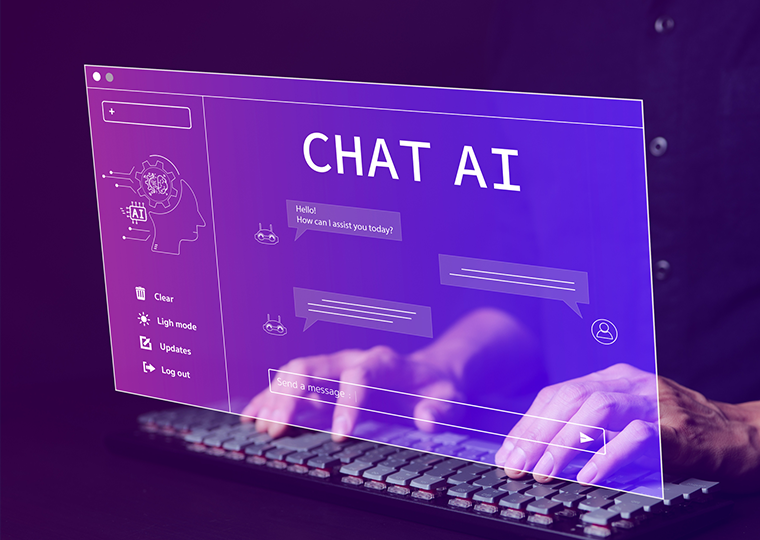
For years, “future-self” nudges have been fairly low-tech, such as writing letters to, and from, our future self. Recently, advances in AI have started to make those exercises more vivid. A 2024 study, for example, found that young adults, who engaged in an AI-powered chatbot exchange with their 30-years-older AI twin, reported feeling a stronger connection to their distant future. But even that AI-enabled approach was limited as it relied on text-based conversation paired with a single, static AI-aged photo.
Now, research spearheaded by the MIT Media Lab — which also led the earlier chatbot study — advances AI-enabled future-self nudging.
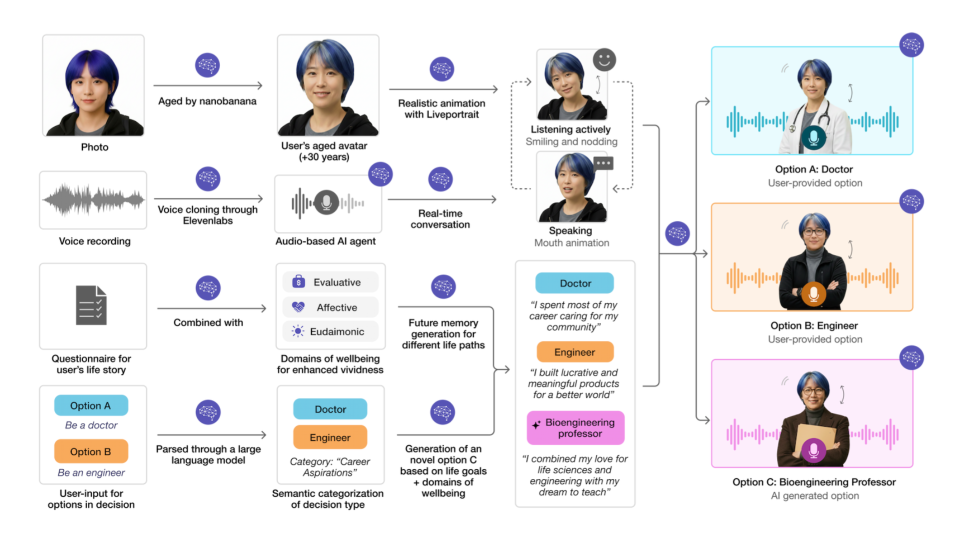
MIT Lab’s Rachel Poonsiriwong, Chayapatr Archiwaranguprok, Constanze Albrecht and Pat Pataranutaporn, along with Stanford’s Peggy Yin, Anderson’s Hershfield, Nanyang Technological University’s Nattavudh Powdthavee and KASIKORN Labs’ Monchai Lertsutthiwong and Kavin Winson, used cutting-edge AI tools to create lifelike simulations. These included Google’s Nano Banana (launched in August 2025) to age participants’ faces, LivePortrait (introduced in summer 2024) to animate those faces with natural movements and Anthropic’s Claude Sonnet 4.5 (released in fall 2025) to enable advanced, realistic conversations.
These tools enabled young adults facing major life decisions to have Zoom-like video conversations with an AI-created “digital twin” of themselves 30 years into the future. This twin not only looked and sounded like them but could also hold real-time conversations using the personal details the young adults had shared. The researchers document that this approach helped participants feel more connected to their future self, and it influenced decision-making, including broadening the options under consideration.
Future You Would Like a Word
Nearly 200 adults from ages 18-28 were asked to share a specific big-ticket decision they were weighing. The most common dilemmas centered on education and career paths. To measure how these conversations informed their thinking, participants framed their dilemma as a binary choice — should I do A, or should I do B? — and at the start of the study identified which choice they were leaning toward. This enabled the researchers to see how the simulation might help the subjects reason through the trade-offs.
The researchers specifically refrained from having the AI-generated twins offer any suggestions. They were designed to provide a vivid link to one’s future self and serve as a very informed sounding board to talk things through with but not serve as an arbiter.
Participants were divided into different groups:
- Control Group: Participants were prompted to reflect on their big decision without any AI interaction.
- The Single-Path Groups: Two different groups spoke with a future self who had taken only one of their two options (either A or B).
- The Balanced Perspective Group: These participants spoke with two future selves — one who had chosen Option A and one who had chosen Option B.
- The Expanded Choice Group: These participants met their original A and B twins, plus a third “Novel Option.” This third option was a hybrid distillation of preferences the participant was weighing. For example, a participant who shared they were wrestling with whether to pursue being a doctor or an engineer, might be presented with a future self who became a bioengineering professor. The Novel Option path third path was designed to break the narrow focus that often keeps us trapped between just two choices.
The diagram below illustrates how the researchers mapped out these different life paths, using AI to turn a participant’s initial preferences into a face-to-face conversation with multiple versions of their future self.
Interestingly, all the groups showed an increased willingness to reconsider which path to take. Even the control group showed some movement, which jibes with previous research that any form of contemplation can tighten the bond with one’s future self, which tends to alter decisions that will impact that older self. And every group, on average, reported a significantly higher sense of connection with their future self.
But the biggest shifts in perspective came from the groups that interacted with their much older AI self. Participants who spoke with just one future self were roughly twice as likely to shift toward that specific path than those in the control group. About 15%-18% of participants moved toward the path represented by their future self, compared with roughly 8% in the control group.
When participants spoke with two future selves — one for each option — about 34% reconsidered which path to take, compared with about 11% in the control group. Seeing both futures appeared to help participants evaluate trade-offs, rather than pushing them in a single direction.
The most striking results came from the group that also encountered a third, previously unconsidered option. Twenty percent of participants in this condition chose the novel path, compared with just 2.7% of the control group. The conversations didn’t just nudge preferences — they expanded the set of possibilities participants seriously considered.
A key nuance teased out in the research is that participants who entered the study with a higher sense of agency — confidence in their ability to drive their futures — were more likely to consider changing their original path.
After the experiment, participants rated the value of their experience on a scale of 1-7. While the visual realism of a digital twin(s) was appreciated — scoring a solid 5.16 — it was actually the factor participants valued the least. They gave a higher average score of 5.53 to how much the twin(s) helped them with the practical logic of the decision and 5.58 to how much the twin helped them see if a path provided a sense of meaning and stayed true to their personal values.
The study makes clear that design choices matter: Presenting a single future self can subtly steer decisions, while showing multiple futures helps people weigh trade-offs more thoughtfully. The authors of this research acknowledge the potential for unethical manipulation of their approach, such as programming a future self to promote specific investments. And this same technology is how we now find ourselves in the scary and dangerous new frontier of eerily realistic deep fakes. Still, when employed responsibly, this research shows how AI can help bridge the future-self gap and improve consequential decision-making.
Featured Faculty
-
Hal Hershfield
Professor of Marketing and Behavioral Decision Making
About the Research
Poonsiriwong, R., Archiwaranguprok, C., Albrecht, C., Yin, P., Powthavee, N., Hershfield, H., Lertsutthiwong, M., Winson, K., & Pataranutaporn, P. (2025.) Simulating Life Paths with Digital Twins: AI-Generated Future Selves Influence Decision-Making and Expand Human Choice. arXiv preprint arXiv:2512.05397.