Shoppers’ highly imperfect understanding of the problem leads to poor buying decisions
Consumers understand that a lot of those five-star products on Amazon are not nearly as well-liked as the ratings suggest. Many companies pay people to write glowing reviews — and shoppers know it.
Consumers, however, seem just awful at distinguishing products that pay for fake reviews from those with honest ratings. When shown example products in a research study, subjects repeatedly fell for the fakes or suspected honest products of including them, according to a working paper by UCLA Anderson’s Ashvin Gandhi and Brett Hollenbeck and Northwestern’s Zhijian Li.
The researchers investigate how the confluence of these issues — wariness in review ratings systems and the unreliable product information fake reviews effectively spread — affect buyers, sellers and platforms.
Researchers culled 1,500 products that solicited fake Amazon reviews on private Facebook pages set up for such transactions. They also collected weekly star ratings, reviews, sales ranks, prices and advertising for both the review-buyers and their close competitors.
The results suggest fake reviews constantly distort buying and pricing decisions in today’s Amazon marketplace. The researchers’ model also offers insights into how things might change if the fakes went away, or if consumers trusted the ratings more.
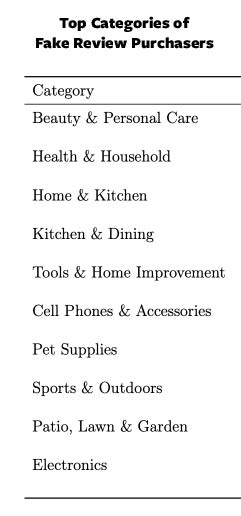
A sample from the study’s observations:
- Fake reviews work tremendously well for the product sellers that buy them. Those sellers raised prices and saw unit sales rise an average 27.2%.
- Honest sellers surrendered market share and profits to lower quality products amid fake reviews. The honest sellers’ unit sales decline an average 4.4%, and they react to the dishonest competition by lowering their own prices.
- Consumers benefit from lower prices on honest products. But, taking in the whole picture, those benefits are completely wiped out by the poor buying decisions that misinformation from fakes leads consumers to make.
- Amazon benefits from fake reviews in ways that disincentivize policing them (although it does). Theoretically, the platform’s revenues are maximized when there are a lot of fake reviews and when customers trust their conclusions.
What If Fake Reviews Went Away?
Online customer reviews shape reputations for sellers on and off the internet, including service providers like hotels, restaurants and medical practitioners, the researchers note. Sellers across industries have filed lawsuits and formal complaints alleging they lose business to companies that buy fake reviews.
Consumer advocacy groups both push for regulation and warn shoppers about their prevalence. In October 2024, the FTC enacted new rules barring the sale and purchase of fake consumer reviews. The regulation includes penalties of up to almost $52,000 per violation.
Regulation, however, may not be enough to end the market distortion fakes have caused, particularly when paired with heightened suspicion of ratings generally. The study suggests review-based markets work best if both the actual fakes and consumer skepticism about the rating system disappeared.
If shoppers remain distrustful of reviews — perhaps rejecting the notion that regulation can prevent fakes — they will continue to make disappointing purchases and reject better options from honest sellers, according to the study. That’s largely because, in the absence of trustworthy ratings, buyers rely on even worse cues to gauge product quality.
For example, the shoppers surveyed were especially suspicious of five-star ratings. In fact, the authors note, high ratings in themselves are poor indicators of manipulation, and many quality sellers get penalized for them.
A high number of reviews is one of the best signs of credible ratings, but the study’s subjects paid little attention to quantity of reviews. They thought they could identify fakes by their wording, but allowing them to read the reviews didn’t improve their accuracy at all. Very often, they picked sponsored (sellers pay for prominent placement) or high-priced products as the best choices — two notoriously poor indicators of quality.
Honesty: Not a Winning Strategy for All
Consumers are harmed most by the fake reviews themselves because they effectively dupe shoppers into regretful purchases, the study shows. Honest sellers suffer more from consumer mistrust that fakes bring to the market; it forces price cuts to compete with lower quality products.
For Amazon, the study suggests more complicated issues around fakes. Quietly finding and removing them, as the platform does now, “is the most harmful policy (to platform revenues) in the short-run,” according to the study. It cuts platform revenue from inflated sales by manipulators, and it does nothing to inspire confidence in the rating system generally.
From a purely financial perspective, the model suggests that convincing the public that fakes are highly policed, but blocking only enough of them to instill credibility, would be the most lucrative strategy for any platform that relies on customer reviews.
Featured Faculty
-
Ashvin Gandhi
Assistant Professor of Strategy
-
Brett Hollenbeck
Associate Professor of Marketing
About the Research
Gandhi, A., Hollenbeck, B., & Li, Z. (2025). Misinformation and Mistrust: The Equilibrium Effects of Fake Reviews on Amazon.com.