$100 per taxpayer seems to erode backing for restrictions on guns in alcohol-serving establishments
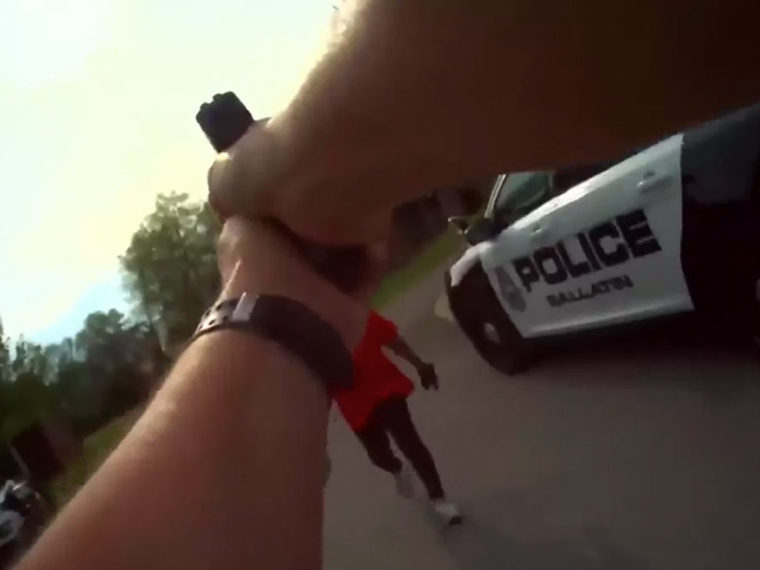
Americans generally favor some sort of gun control while disagreeing widely about exactly what practices to limit. One policy, though, gets strong support: restrict firearms in bars and other places that serve alcohol (75% agreed in one survey) .
That’s until you ask people to pay for it, according to a paper published in Health Affairs Scholar, by UCLA Anderson’s Robert Zeithammer, NYU’s Supriya Kapur and Diana Silver, and UCLA’s Department of Health Policy and Management’s James Macinko. Their work found that a significant majority of potential voters indeed favor restrictions on guns where alcohol is served, but support drops if enforcement costs the respondent as little as $100 a year.
“While support for firearm restrictions in alcohol-serving venues is widespread, even modest implementation costs significantly reduce public backing,” the authors conclude. In other words: The support for regulating the intersection of alcohol and firearms is widespread but weak.
A Less-Challenged Form of Gun Control
Guns contributed to more than 44,000 deaths in 2024, according to Johns Hopkins Annual Firearm Mortality Report, while the annual cost of gun violence is estimated at $557 billion a year — in personal suffering, lost wages, medical expenses and law enforcement.
Despite efforts by states and municipalities aimed at reducing gun violence, the U.S. Supreme Court has repeatedly struck down most laws that restrict the sales or carrying of firearms. In June 2026, the court invalidated a Hawaii law that barred armed gun owners from public-facing private businesses. To the court, contemporary concerns about public safety aren’t enough to justify a gun ban.
An exception has been that nearly every state has some restrictions on carrying firearms where alcohol is served. These restrictions vary widely. Texas, for example, prohibits guns in establishments that get at least 51% of their revenue from alcohol sales, while New Mexico bans concealed firearms in any premise where alcohol is consumed.
These laws typically face little opposition and — so far — have survived judicial scrutiny. Even a large majority of gun owners support bans on carrying guns in bars, according to a 2023 survey.
Measuring the Willingness to Pay for a New Restriction
The study by Zeithammer, Kapur, Silver and Macinko sought to dig deeper into public opinion about alcohol-related firearm regulations by asking participants who should be covered by such bans, in what sorts and sizes of venues such bans should apply and, notably, at what hypothetical cost of enforcement. For the study, the researchers used a conjoint analysis survey (also sometimes called a “discrete choice experiment”), a method which, unlike public opinion polls, requires participants to address policy trade-offs when making their choice.
The 306 participants were presented with a choice of hypothetical ballot measures in the upcoming election that differed not only in the types of venues where firearm restrictions would apply (e.g., small, medium or large) and the groups of people who would be restricted (e.g., intoxicated people, people convicted of alcohol-related crimes or all felons), but also in the cost of enforcing the ban, financed through a small annual tax increase (e.g., $0, $100, $200 or $300). Conjoint analysis uses the choices participants make to build a model of their preferences for the different features of the ballot measures, and the model then allows researchers to predict support in different what-if scenarios.
The prospect of even a small cost caused support for the various restrictions to fall significantly. With no cost of enforcement (i.e., no annual tax increase), restricting firearms in large venues was favored by nearly two-thirds of respondents no matter which group of patrons the restrictions applied to. But with a $100 annual tax, support declined by more than 10 percentage points for each group. Support dropped below 50% with a tax increase of $200 and dropped to around 30% with a tax increase of $300.
Economic cost-benefit analysis is common when making regulatory policy but rarely used in assessing law-enforcement measures, including gun control laws. Control advocates frequently cite the cost of gun violence on human lives, while opponents will point to the hypothetical costs of, say, enforcing universal background checks. But data showing the actual trade-offs between enforcement costs and potential lives saved from specific gun control measures are hard to come by.
For instance, a bar or stadium places staff and “no-guns” signs at the entrance and possibly needs to employ metal detectors. The public cost comes when municipalities or states help defray some of these costs as part of the new law, both in terms of helping pay for equipment and staffing the venue with law enforcement. Estimating enforcement costs and breaking one or a few out by cost would seem difficult at best.
In an email exchange, Zeithammer said that while simple opinion polls find widespread support for regulating guns where alcohol is served, enforcing such bans isn’t free. “So, one way to measure the strength of the support in dollars is to invoke this cost,” he said.
Who Can’t Bring a Gun In
By making choices from different hypothetical ballot measures, participants were indirectly asked how restrictions should be imposed: Should they apply to people who are visibly intoxicated, those with a previous alcohol-related conviction, those with a previous felony, those who are either intoxicated or a felon, or those who are intoxicated or with an alcohol-related conviction (or no restrictions at all)? Should bans cover small venues like bars, midsized places like movie theaters or large ones like sports stadiums?
The researchers also collected demographic information for the 306 respondents, such as age, sex, education, political party identification, gun ownership and attitudes about firearms, and state of residence. The demographic information was used to weight respondents in order to estimate support among the U.S. voting-age population.
A clear majority of the voting-age population favored banning guns where alcohol is served. For example, 69% favored barring felons from carrying guns in large venues, 63% favored such bans in midsized establishments, and 57% favored them in small ones. The largest group, nearly three-quarters of the total, favored restricting either intoxicated people or felons from bearing arms in large venues. Enforcing such differentiation of patrons, of course, would be far more complex (and perhaps expensive) than simply banning guns from an establishment altogether.
Younger, Democrat and female voters were significantly more likely to favor restrictions than older, Republican and male respondents. Republican men and independents of both genders showed the least support for restrictions. Gun ownership had no significant effect on the choices.
Few studies consider cost in gun control matters. In one, cited by the authors, participants indicated they would be willing to pay up to $744 a year for a package of common gun-control measures if it would deliver a 20% reduction in gun violence. Generally, states with more restrictive gun laws experience less gun violence.
The cost thresholds used in the study by Zeithammer, Kapur, Silver and Macinko are somewhat arbitrary. Given multiple gun laws and other variables, it doesn’t seem likely one could estimate how many lives might be saved if gun-alcohol restrictions were adopted, or how much money would be saved if they’re reversed.
The results suggest voters, given a price for a law, can be stingy, even in matters of public safety. “Potential voters value most of the restrictions we study less than $100 annually,” the authors assert, “and would rather allow firearm possession by licensed individuals in public places that serve alcohol than pay that much more in taxes every year.”
Featured Faculty
-
Robert Zeithammer
Professor of Marketing
-
James Macinko
UCLA Fielding School, Professor of Health Policy and Management and Community Health Sciences
About the Research
Zeithammer, R., Kapur, S., Silver, D., & Macinko, J. “Public support for gun restrictions in public places that serve alcohol: the cost of enforcement matters,” Health Affairs Scholar, 4(8), qxag200.