The spots, aimed at demographic groups, can feel like stereotyping, even discriminatory
An estimated three-quarters of all advertising in the United States now happens in the digital realm, where marketers can leverage detailed click-level information to deliver hyperpersonalized ads.
But in recent years, privacy concerns have led to some modest concessions. Since 2021, Apple asks users downloading apps whether they’d prefer to “Ask App Not to Track.” Other platforms have given users more control over how they are tracked, though accessing those settings often requires some digging.
In response, marketers have leaned more on an old-school approach to targeting, using less personal identifiers such as age and gender. Research published in the Journal of Consumer Research suggests that this fallback creates problems of its own.
Across 14 experiments involving more than 9,000 participants and Facebook experiments involving more than 500,000 users, UCLA Anderson’s Franklin Shaddy and Columbia’s Elizabeth M.S. Friedman and Olivier Toubia find that consumers often view targeting based on demographic characteristics — such as groupings based on gender, age and race — as stereotyping, or even discrimination.
The authors note that what seems to set off consumers is when they are demographically bucketed in a way that seems irrelevant to the product or is based on personal attributes that are beyond their control. And those negative feelings translate into real consequences: lower click-through rates, reduced purchase intentions and diminished brand trust.
Importantly, companies don’t need to spell out who they are targeting for this reaction to kick in. Simply seeing an ad that features only women or only one race can be enough to spark feelings of unfairness.
Bandages in Darker Colors
Yet consumers become more receptive if ads provide a reason for being targeted based on a broad demographic trait.
In one experiment, nearly 400 Black participants rated ads for Band-Aids on a fairness scale of 1 to 9. When told the ad targeted only Black consumers with designs the advertiser deemed more appealing to Black customers, the fairness rating (6.24) was significantly lower than when told the ads were for a general audience (6.99).
But when participants were told the ad campaign for Band-Aids in darker colors was designed to match Black consumers’ skin tones, the fairness gap disappeared. Participants rated the race-targeted campaign as slightly more fair (7.20) than the ad aimed at a general audience (7.17).
Consumers are also sensitive to visual cues that suggest demographic targeting. In one experiment, 397 participants saw an identical bank ad with the slogan “a bank YOU can bank on.” The only difference was the ad’s photo. As shown below, some participants saw a photo with people of multiple races, others saw one race, and the far right photo is essentially the control photo, as its mix of gender, age and race reduces the odds of it being seen as demographically motivated.
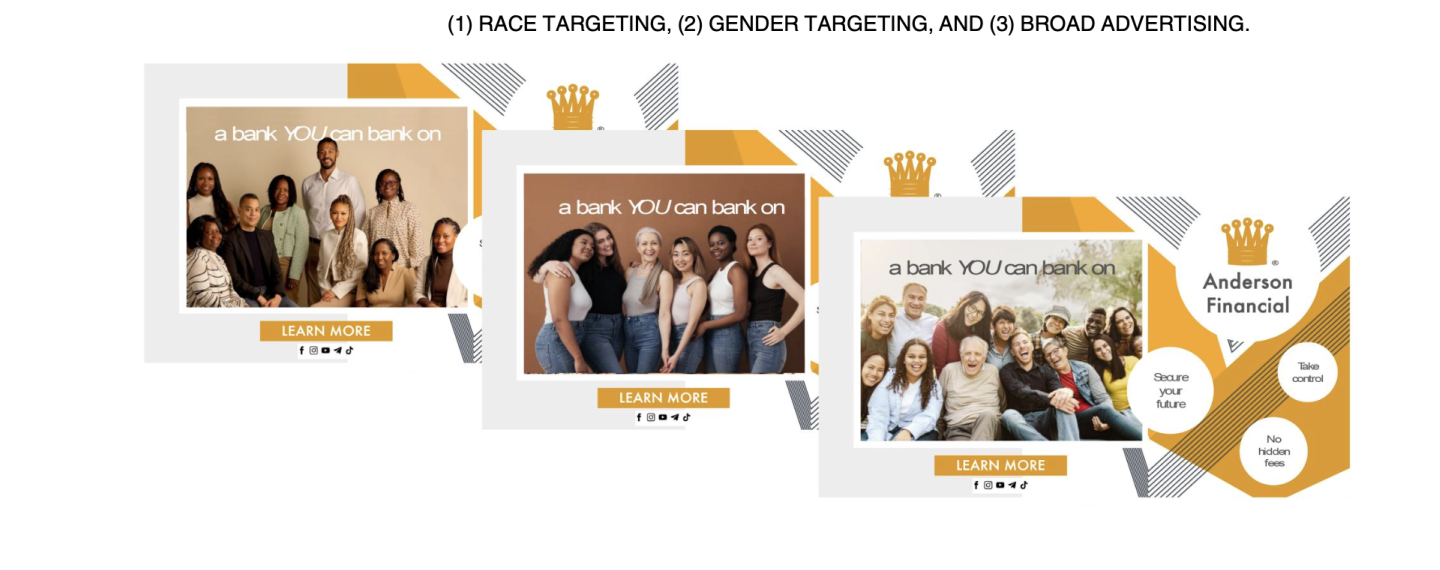
When the ad showed a single race (above left photo), people rated its fairness at 6.49, much lower than the 7.57 fairness score for the diverse photo (above right). Similarly, when the ad focused on a single gender (above middle photo), its fairness rating dropped to 6.28, compared with 7.67 for the diverse “control” photo.
Toyotas For Everyone
Another experiment that had participants read news coverage landed on the same finding. The researchers shared a fictional article with 490 Black participants, based on a real New York Times story about Toyota’s Camry ads.
Half of the group read that Toyota planned to air commercials during shows like Black-ish and Scandal, along with hip-hop and R&B radio spots — media popular with Black audiences. The other half read that the ads would run during Survivor and the Olympics, paired with NPR and pop/rock radio spots — a clear signal of targeting a general audience.
Participants gave a lower fairness rating for the strategy that explicitly targeted media popular with Black audiences (6.06 average) compared with the more general advertising strategy (7.11).
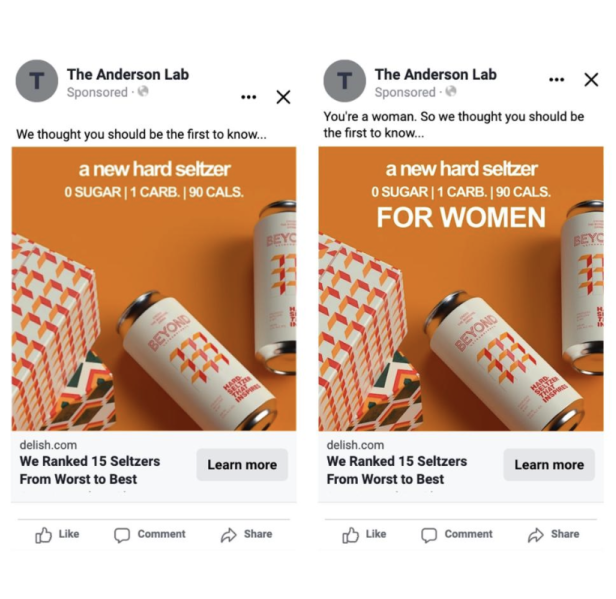
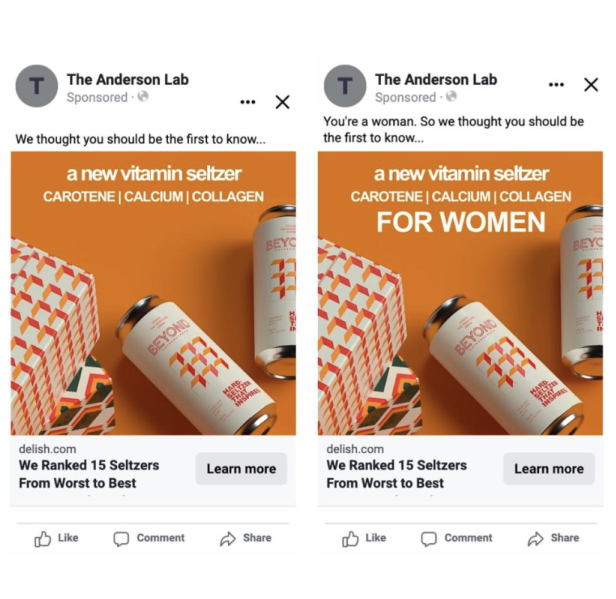
When the research moved into the real world, Shaddy, Friedman and Toubia exposed a bottom-line cost to annoying consumers with broad stereotyping. They ran a Facebook ad campaign that showed more than 135,000 women ads for a new hard seltzer. Half of the participants saw generic copy: “We thought you should be the first to know.” The other half saw: “You’re a woman. So we thought you should be the first to know” — with text reading “a new hard seltzer. FOR WOMEN.”
The gender-targeted version of the ad had a click-through rate of 0.86%, lower than the 1.39% click-through rate for the generic ad. A follow-up Facebook experiment with nearly 378,000 users demonstrated that when the ad was adjusted to highlight the seltzer’s inclusion of nutrients specifically relevant to women, the click-through rates for the gender-targeted ad (0.68%) became comparable to the broad advertising version (0.68%).
Other experiments revealed acceptance when the targeting is tied to a person’s actual situation — like the ZIP code they live in. It also helps when the targeting doesn’t come across as laziness from a big multinational with a massive marketing budget, but rather as the best effort of a smaller business likely hamstrung by a modest advertising budget. The researchers also found broader acceptance of the practice when it was framed as being standard industry practice.
Clearly, context matters when deploying demographic targeting in advertising. Without centering a relevant connection between the demographic and the product, targeting can feel arbitrary or even discriminatory, eroding consumer trust and brand support.
Featured Faculty
-
Franklin Shaddy
Assistant Professor of Marketing and Behavioral Decision Making
About the Research
Shaddy, F., Friedman, E.M.S., & Toubia, O. (2025). Fairness Perceptions in Demographic Targeting. Journal of Consumer Research, ucaf048.