The perceived fairness of everything — from advertising, targeting and distribution — is now up for judgment. A review suggests what needs to be studied next
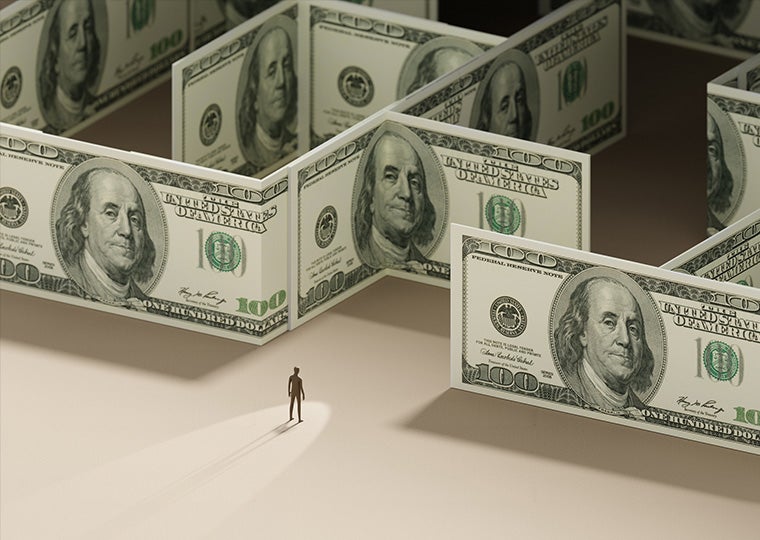
Building a successful consumer brand has always hinged on more than offering a compelling product. Consumers also need to believe they are getting a fair deal — and being treated fairly. Respect begets loyalty. Yet what constitutes fairness has expanded over time, adding a new level of complexity to marketing strategy.
In a survey of research in Consumer Psychology Review, Columbia’s Elizabeth Friedman and UCLA Anderson’s Franklin Shaddy trace how the study of fairness in consumer marketing has evolved and sort the now large body of research into a coherent and easily accessible structure.
What Makes a Price Fair (or Not)
The foundational work on consumer perceptions of fairness started in the most obvious place: pricing. Forty years ago, research that included contributions by two behavioral specialists who would go on to win Nobel Prizes found that consumers have no issue with a price hike when it’s tied to a legitimate cost, such as raw materials. What doesn’t go over well is when consumers sense they are being gouged for profit-maximization, such as when retailers mark up bottled water or electric generators as a hurricane approaches.
Technology has introduced new ways in which businesses can run afoul of expectations about what makes for a fair price. When Wendy’s floated testing dynamic pricing on its menu in 2024 — suggesting a Frosty might cost more when the restaurant was busier — consumer uproar over perceived price gouging stopped the plan before it started. Software has revealed quieter versions of the same tension: Tesla had long used software to keep some purchased battery capacity locked behind a paywall, a practice that only became public when the company proactively unlocked that extra range for free as Hurricane Irma bore down in 2017 — a gesture of goodwill that ended up revealing an underlying business model that its customers regarded as unfair.
Research on consumer perceptions of fairness has more recently widened well beyond pricing, starting with the way companies target and advertise to consumers. And increasingly, fairness isn’t only about the treatment consumers themselves receive. It can also encompass how a company treats other people, as well. For example, as Black Lives Matter and #MeToo elevated racial and gender inequality in public discourse, companies that advertised their own commitments to diversity and inclusion — yet didn’t have many women or minorities in senior leadership — risked accusations of hypocrisy and triggered a “woke washing” backlash.
Friedman and Shaddy also lay out where they believe fairness research needs to go next. Their suggestions reflect a distinctly 21st-century marketing landscape in which factors such as intersectionality and artificial intelligence deserve greater attention.
Beyond the Obvious
The basic fairness agreement between consumers and brands — we’ll tolerate price increases when warranted as the costs of business increase but don’t take advantage of us to price gouge — remains pertinent. But research has continued to expand how other fairness considerations can come into play. Some of it is fairly straightforward, such as Everlane’s commitment to cost transparency. The online fashion retailer’s breakdown of each item’s costs, including profits to Everlane, has been shown to engender greater consumer trust.
Other findings are less intuitive. A recently proposed moral harm model of fairness found that consumers look beyond their own pocketbooks to assess how a pricing decision may affect others: Research has shown that when the cost of a lifesaving drug is raised, it provokes more consumer outrage than an equivalent price hike on a luxury good (because doing so for a lifesaving drug feels more harmful to society, writ large). A related study corroborates the same basic logic in a different setting. Producing an adaptive product for people with disabilities can cost more for a brand — such as Nike’s hands-free sneakers and Microsoft’s adaptive Xbox controller — yet consumers still read a higher price as exploitative of a vulnerable customer segment, rather than justified.
And Beyond Pricing Entirely
For all the attention paid to fairness in pricing, the field has also produced an abundance of research that focuses on other factors that consumers bring a fairness lens to. Friedman and Shaddy helpfully organize all of this “other” fairness research into two frameworks familiar to any marketer: who a company decides to target and how it positions itself, and the four P’s of execution (price, promotion, place and product).
Recent research that Shaddy and Friedman collaborated on with Columbia’s Olivier Toubia found that targeting can be a touchy fairness topic. Consumers are okay when demographic targeting is carefully directed at solving a problem or fitting a need, such as Band-Aid offering bandages in a range of skin tones. But they bristle at being targeted based on demographics when it isn’t clear that these personal characteristics are actually relevant to the product or service and when they’re not something they can control themselves.
Positioning gets judged just as sharply, mostly on sincerity: Consumers praised TOMS for pioneering its program that for every pair of shoes bought the company would donate a pair of shoes. But when Skechers launched a similar program under its BOBS line — matching the one-for-one model and even extending donations beyond shoes to animal shelters — consumers saw it as a less sincere bit of corporate do-gooding anyway, simply for following TOMS’ lead.
Issues related to marketing execution strategy are equally nuanced. A Lyft discount for waiting strikes people as fairer than an Uber surcharge for skipping the line. Research Shaddy collaborated on with NYU’s Maria Giulia Trupia exposed that expedited delivery can upset brand loyalty. Being charged a fee for speedy delivery reads as a company cashing in on your impatience, while a discount for patience doesn’t raise the same suspicion.
Shaddy’s work with University of Chicago’s Anuj Shah found that putting personal effort into securing a scarce product is deemed more fair than paying up: A wait in line reads as a legitimate measure of how much someone wants something, while money changing hands for the same thing can read as queue-jumping in disguise. The authors argue that this is why, when a good or service is scarce, consumers believe it’s fairer to use a first-come, first-served policy, as opposed to jacking up the price.
Fairness Research Fit for Our Times
The review highlights that one limitation of existing research is its sorting of customer segments into silos, when people’s identities are actually much more nuanced. The authors note that past research exploring the fairness of unequal treatment of different races or genders may not apply to intersectional combinations of these factors. In other words, fairness scholars should be wary of drawing conclusions about how Black women might feel, by simply combining findings on Black consumers with findings on female consumers. Building on intersectionality theory, Friedman and Shaddy suggest that future research needs to directly address how the multiple identities of a given consumer — in combination with each other — shape their attitudes toward fairness.
They also propose that fairness research needs to focus more on the ways in which customers are no longer just concerned about themselves. As seen in the backlash to claims that fast fashion relies on factories in foreign countries that exploit workers, consumers seem to care about fairness up and down the supply chain. Friedman and Shaddy argue that researchers need to better understand how those judgments form, and what they may cost a brand.
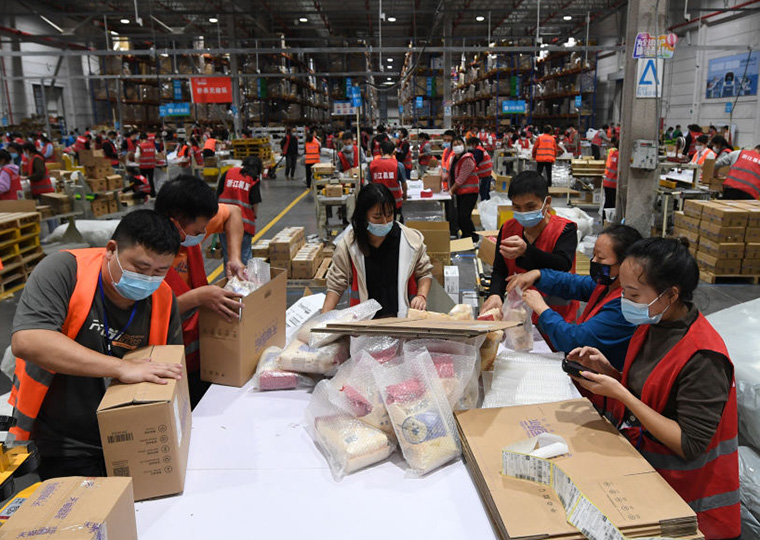
And then there is the big shadow already being cast by artificial intelligence. Algorithms are now responsible for strategies formerly performed by humans, including which customers see which ads, which neighborhoods get same-day delivery, and who gets a chatbot instead of a person when in need of customer service. Friedman and Shaddy encourage future research to explore whether consumers view the fairness of decisions made by bots any differently than how it has held humans accountable for decades.
Featured Faculty
-
Franklin Shaddy
Associate Professor of Marketing and Behavioral Decision Making
About the Research
Friedman, E. M.S., & Shaddy, F. (2026). Fairness perceptions in marketing strategy and across the marketing mix: An integrative review and call to action. Consumer Psychology Review.